
What Is the Difference Between a Uniform Manufacturer and a Supplier?
Make an Enquiry
Choosing a manufacturing partner is not only about the final product but also about the range of services that support quality, consistency, and long-term usability. A professional manufacturer should provide end-to-end support that goes beyond basic production, ensuring garments meet functional needs, branding standards, and operational timelines without disruption.
Table of Contents
ToggleUnderstanding the Apparel Supply Chain
Before comparing the two, it’s helpful to understand the basic flow of production. Apparel typically moves from raw materials to finished products through multiple stages: fabric sourcing, cutting, stitching, finishing, quality checks, and finally distribution. Manufacturers and suppliers operate at different points within this process, which directly affects control, customization, and accountability.
What Is a Uniform Manufacturer?
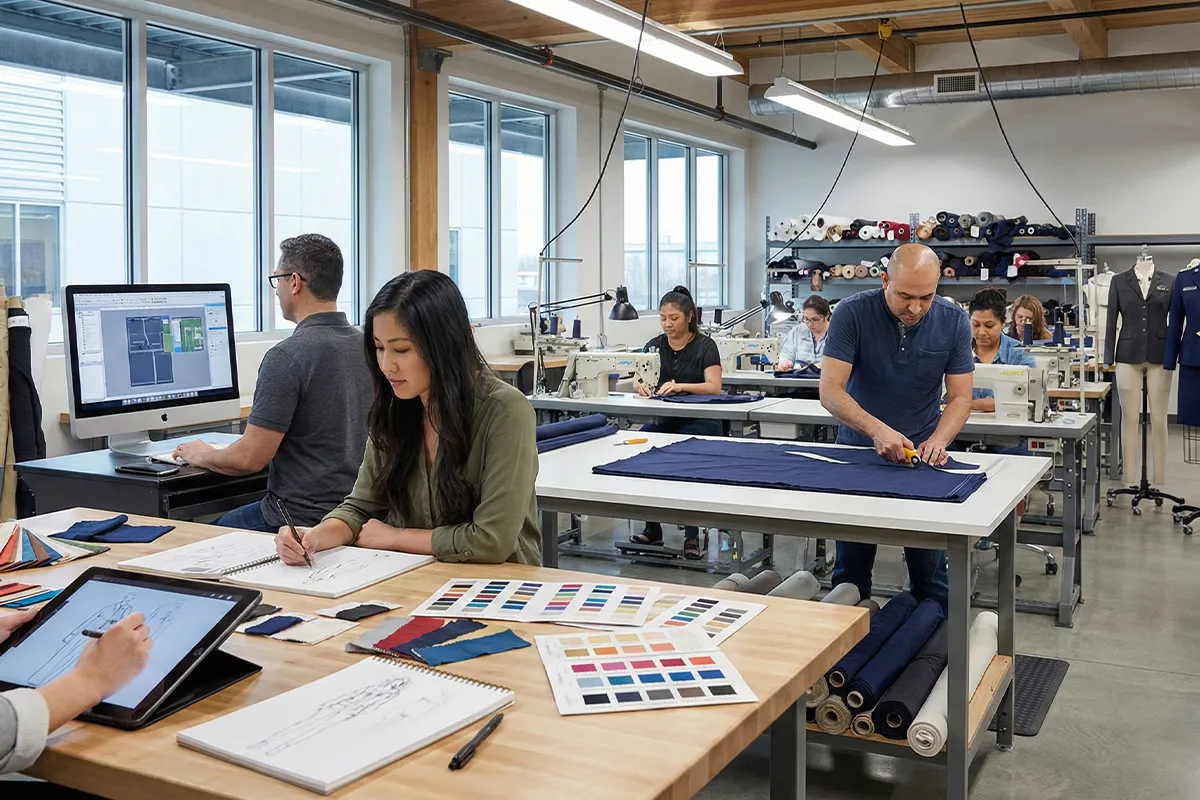
A manufacturer is responsible for producing garments from the ground up. This includes fabric handling, pattern development, stitching, finishing, and quality control. Manufacturers operate production units or factories where garments are physically made.
Key responsibilities include:
- Fabric cutting and stitching
- Design execution and pattern grading
- Quality inspection at multiple stages
- Bulk production and repeat orders
- Custom sizing and finishing standards
Because manufacturers control production directly, they influence durability, fit accuracy, and long-term consistency.
What Is a Uniform Supplier?
A supplier acts as an intermediary between the manufacturer and the buyer. Suppliers may stock ready-made products, source from multiple factories, or coordinate orders based on client requirements. In many cases, suppliers do not own production facilities themselves.
Typical supplier responsibilities include:
Sourcing finished or semi-finished products
- Managing inventory
- Handling logistics and delivery
- Offering catalog-based selections
- Coordinating with third-party manufacturers
Suppliers focus more on availability and distribution rather than production control.
Control Over Quality and Consistency
One of the biggest differences lies in quality control. Manufacturers oversee the entire production process, allowing them to maintain consistent standards across batches. Suppliers, on the other hand, rely on external factories, which can lead to variation if sourcing changes over time.
This distinction becomes especially important for businesses that need consistent appearance across teams over long periods. Many organizations compare uniform manufacturers at this stage to ensure production standards remain stable across reorders.
Customization and Design Flexibility
Manufacturers typically offer greater flexibility when it comes to customization. Since they handle production directly, adjustments in fabric, fit, stitching style, and design details are easier to implement.
Suppliers usually offer limited customization, often restricted to logo placement or color selection from existing designs. This model works well for short-term or small-volume needs but can be restrictive for growing teams.
Pricing Structure and Cost Transparency
Manufacturers often provide clearer cost structures because pricing is based on production inputs such as fabric, labor, and order volume. This transparency helps businesses understand long-term cost efficiency, especially for repeat orders.
Suppliers may bundle sourcing, storage, and logistics costs into a single price. While this can appear convenient, it may not always reflect the most cost-efficient option over time.
Lead Times and Scalability
Production timelines also differ significantly. Manufacturers typically require longer initial lead times but offer smoother scalability for bulk or repeat orders once systems are in place.
Suppliers may deliver faster for ready-stock items but can face delays when sourcing from external factories during peak demand periods. Scalability often depends on third-party availability rather than internal capacity.
Accountability and Long-Term Reliability
When issues arise—such as sizing inconsistencies or fabric changes—manufacturers can address them directly at the production level. Suppliers often need to coordinate with external factories, which can slow resolution.
For organizations planning long-term sourcing, working with experienced uniform manufacturing experts often provides better accountability and process continuity.
Which Option Is Better for Your Business?
The choice depends on your needs:
Manufacturers are better suited for businesses that require customization, consistent quality, and long-term scalability.
Suppliers are often suitable for smaller orders, quick availability, or standardized designs.
Understanding these differences helps businesses align sourcing decisions with operational priorities rather than short-term convenience.
Final Thoughts
While manufacturers and suppliers both play valuable roles, they serve different purposes within the apparel ecosystem. Manufacturers focus on production control, quality consistency, and scalability, while suppliers prioritize sourcing and distribution efficiency.
Businesses seeking long-term consistency often lean toward working with reliable uniform specialists who maintain production standards and support repeat requirements over time.

